For operators running machinery, trucks, plant or agricultural equipment around Mount Barker, one failed hose can stall an entire job. The cost is rarely just the part itself. It is the labour waiting on site, the vehicle stuck in the paddock, the lost production window and the pressure to get the machine moving again before the day is lost.
That is why hydraulic hose repair in Mount Barker should never be treated as a last-minute reaction. A better approach is to understand what causes repeated failures, where early warning signs appear, and when mobile support is the smarter option for Adelaide Hills businesses that cannot afford extended downtime.
Why Mount Barker and Adelaide Hills equipment sees repeat hose failures
Hydraulic hoses work hard in local conditions. Dust, vibration, heat, rubbing points and repeated pressure cycles all shorten service life. Equipment used across civil work, farming, transport and heavy service fleets often runs in mixed terrain, which means hoses are exposed to sharp movement, weather and contamination at the same time.
A hose that looks acceptable from a distance can still be close to failure if the outer cover is worn through, the crimp is sweating oil or the line has started to twist under pressure. When those warning signs are ignored, the next failure usually happens at the worst possible time: while the machine is under load and the schedule is already tight.
What to look for before a hose blows on site
Most breakdowns give some warning. Operators and maintenance teams should watch for abrasion around clamps and pinch points, blistering near fittings, visible cracks in the outer cover, wet dust collecting on lines, and sudden changes in machine response. A slow leak or pressure drop today often becomes a full failure on the next shift.
It is also worth checking hoses after any recent component replacement. When a new ram, valve or fitting is installed, line routing can change slightly. Even a minor change in bend radius or movement path can create rubbing that turns into a preventable breakdown within a few weeks.
When mobile hose repair is the better option
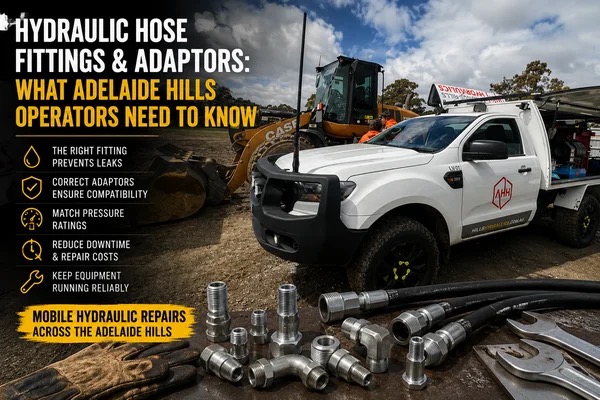
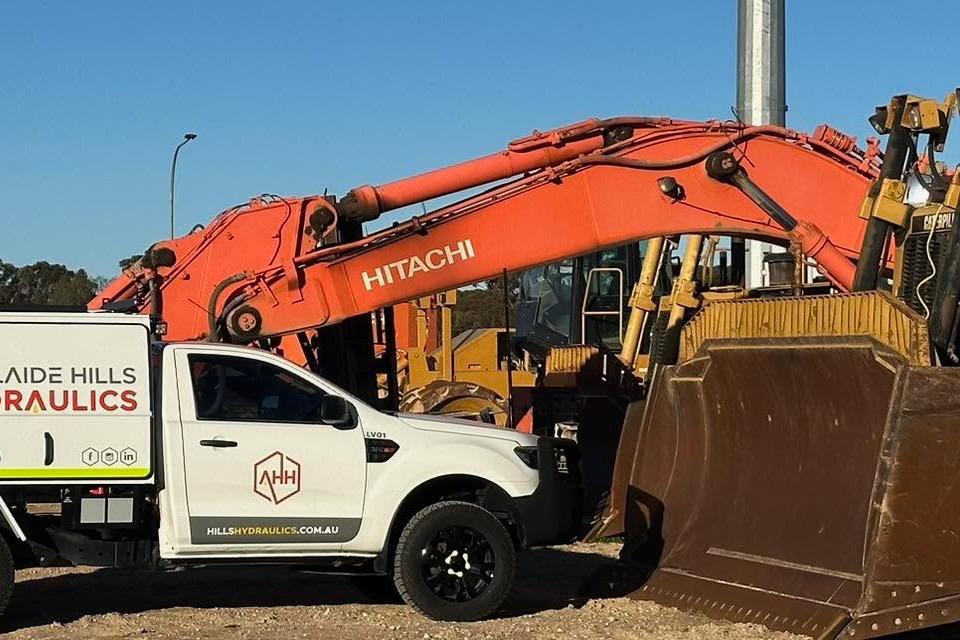
If the machine is stranded, a workshop repair is not always practical. Mobile hydraulic hose repair is often the fastest way to get a truck, excavator, loader, harvester or support vehicle running again without arranging towing or transport delays. For Mount Barker operators, that local response matters because the real cost of downtime grows every hour the equipment sits idle.
A mobile service is particularly valuable when the failed line affects steering, lifting, drive or core production functions. In those situations, the priority is not just replacing the hose. It is confirming the correct hose specification, fitting style and routing so the replacement lasts under real working conditions, not just long enough to leave the site.
How local coverage helps Mount Barker, Murray Bridge and Barossa Valley clients
Businesses rarely operate in only one suburb. A contractor may have equipment in Mount Barker today, a support vehicle in Murray Bridge tomorrow and a service call in the Barossa Valley later in the week. That is why localised service pages and support coverage matter for search and for customers. People want to know the provider understands the job conditions in their area and can realistically respond when the equipment stops.
For Hills Hydraulics, an August article built around Mount Barker still supports the wider Adelaide Hills, Murray Bridge and Barossa Valley keyword set. It also reinforces the brand position already visible in search results: practical breakdown support, local coverage and technical understanding rather than generic trade advertising.
How to reduce breakdowns instead of only reacting to them
The best performing operators treat hose repair and hose inspection as part of routine uptime planning. That means checking high-movement hoses during servicing, replacing lines that are showing multiple failure indicators, protecting exposed sections with the right sleeving or routing adjustments, and keeping a record of repeat failure points across the fleet.
When the same line keeps failing, the answer is usually not to keep replacing the exact same hose in the exact same position. The better fix may involve a routing change, a different hose construction, better clamping, or reviewing whether nearby components are creating excess heat or movement. That is where specialist input saves money over time.
FAQs
How quickly can a mobile hydraulic hose repair be done in Mount Barker?
Response times depend on location, access and the hose type, but mobile repair is designed to reduce downtime by getting the machine assessed and repaired on site where practical.
Can hydraulic hose repairs be completed on farm and civil equipment?
Yes. Mobile hose repair is commonly used for farm machinery, civil plant, trucks, service vehicles and other equipment where moving the machine to a workshop would waste time and money.
Should a hose be replaced if it is only lightly leaking?
Usually yes. A light leak often indicates a bigger failure is coming. Replacing the line before it bursts is far less disruptive than waiting for a full breakdown.
If your operation depends on fast hydraulic support across Mount Barker, Adelaide Hills, Murray Bridge or the Barossa Valley, Hills Hydraulics can assess worn lines, replace failed hoses and help reduce repeat downtime with the right repair approach. Request a service call when your equipment needs fast on-site support.