

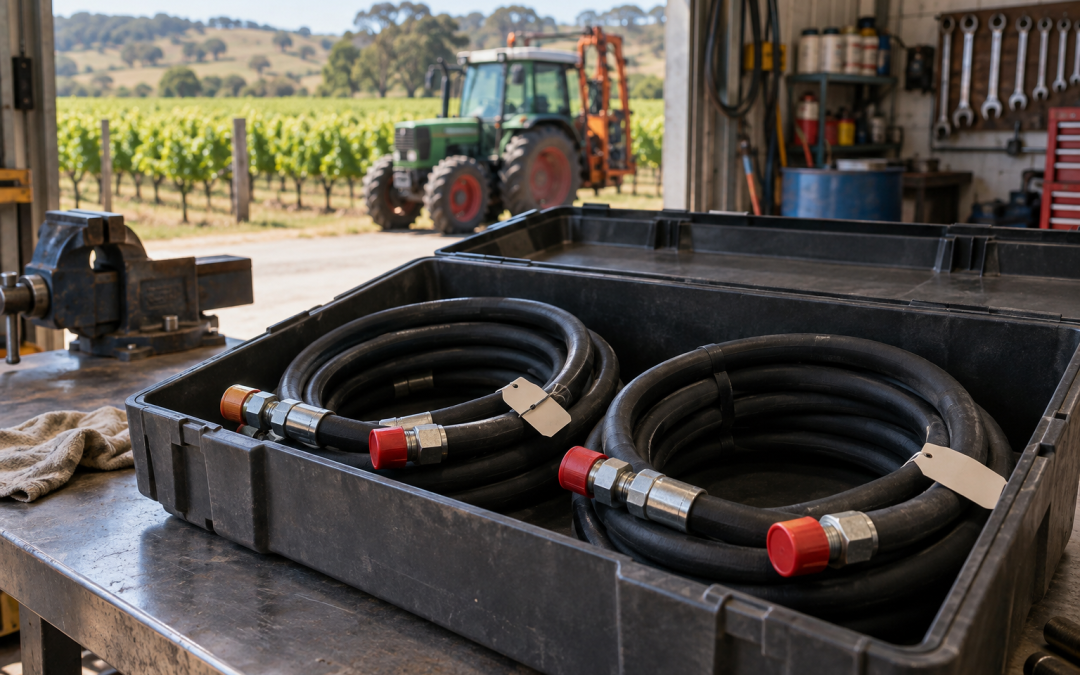
A spare hydraulic hose is useful only when it matches the machine, can be identified quickly and has been stored properly. An unlabelled coil at the back of a shed can create uncertainty at the very moment you need a clear answer. Planning a small, organised stock of suitable assemblies starts with understanding which equipment matters most to your operation.
Adelaide Hills Hydraulics provides hydraulic hose repair in the Barossa Valley, including support for agricultural machinery. A discussion before a busy work period can help establish which spares are worth holding and which jobs are better arranged through a mobile or workshop service. Keeping parts on hand supports that plan; it does not replace safe installation or diagnosis.
Start with the equipment that cannot easily be substituted
List the machines and attachments used for your upcoming work. Consider what happens if each becomes unavailable. A tractor with an alternative available presents a different operational problem from a specialised attachment needed for a narrow work window.
Review service records for repeated hose replacements or assemblies that previously required additional sourcing time. Those records can help guide a conversation with a hydraulic technician. They should not be used to assume that a repeatedly failing hose simply needs more replacements kept in stock.
Ask whether the pattern suggests a routing, application or other equipment issue that needs attention. Addressing the reason for repeated failures is more useful than building a shelf full of the same replacement. Once the requirement is understood, prioritise a manageable set of spares rather than buying a large assortment without a clear use.
Identify the complete assembly
A hose that looks similar is not necessarily suitable. Selection involves the hose specification, the operating application and the fittings at both ends. Length and the orientation of angled fittings can also affect how the assembly fits into the machine.
Have the technician confirm the required assembly against the equipment information. Provide the machine make, model, serial number and any relevant part number. Where the equipment has been modified, explain that history rather than relying only on the original parts list.
Adelaide Hills Hydraulics supplies custom matched assemblies for agricultural hydraulic applications. Our hose supplier Taipan publishes matched hose and fitting systems. That compatibility matters: a fitting that can be attached physically is not proof that the finished assembly meets the application's requirements.
Create a record that another person can understand
Give each spare a clear reference linked to the relevant machine and position. Avoid descriptions such as “tractor hose” when several tractors or hydraulic circuits are involved. Use the equipment identifier and a location description agreed with the technician.
Keep photographs of the installed route and connection points where they can be taken safely. Add the confirmed assembly details and supplier reference to the record. Store a copy where the person arranging repairs can access it, rather than relying on one operator's memory.
Do not disconnect a working hose just to collect measurements. Have a competent person follow the machinery manufacturer's isolation and maintenance procedures. Hydraulic systems can retain pressure after the engine or pump stops, and raised or moving equipment introduces additional hazards.
The record can include:
- Machine and attachment identification.
- Assembly reference and intended installation position.
- Supplier and date supplied.
- Storage location and any inspection advice.
- Details of later modifications that affect compatibility.
Protect spares from damage and contamination
Ask the supplier how each assembly should be packaged and stored. General manufacturer guidance calls for a cool, dry storage area away from direct sunlight, with the ends capped and the hose protected from damaging conditions. A dusty vehicle tray or a shelf beside chemicals is a poor place for a part you are depending on later.
Keep assemblies supported without tight bends or kinks. Protect threads and sealing surfaces, and leave suitable end caps in place until the assembly is being prepared for installation. Separate clean spares from removed or failed components so their condition is not confused.
A labelled storage box can make the correct part easier to find, provided it is large enough for the assembly and does not force it into an unsuitable shape. Arrange the storage so condition and identification can be checked without repeatedly dragging hoses across rough surfaces.
Track age as well as quantity
Unused does not automatically mean suitable for service. Storage conditions, hose construction and seals can affect what checks are needed before installation. Keep the supply and manufacturing information available and follow the relevant manufacturer's guidance for the specific product.
Use a simple stock record to show when an assembly was added, checked or used. Arrange stock so earlier suitable items are considered first, subject to condition and manufacturer requirements. Do not apply one universal expiry period to every type of hydraulic hose or fitting.
When an assembly is used, update the record and decide whether it should be replenished. If a machine has been sold or modified, review its associated spares. Otherwise, a carefully labelled box can still contain parts that no longer match any equipment on the property.
Include the repair arrangements in the plan
Decide who will assess a breakdown, arrange access and authorise work. A spare may shorten one part of a repair, but diagnosis, safe removal, installation and checks still need to be completed. Do not assume the presence of a replacement means the machine can immediately return to operation.
Discuss whether planned assemblies can be prepared ahead of time and confirm collection or delivery arrangements directly. Adelaide Hills Hydraulics offers mobile support and a by-appointment workshop drop-off option in Mount Barker. Availability and turnaround depend on the job and should be confirmed when booking.
Keep the repair contact and machine records together. During a call, provide the site location, equipment details and the spare reference if one exists. This gives the service team a clearer starting point without asking an operator to improvise a repair.
Frequently asked questions
Should every hose on a machine have a spare
Not necessarily. Start with the consequences of downtime, sourcing requirements and advice from the technician. A focused selection with accurate records can be more useful than a large collection of poorly identified parts.
Can one spare be used on several machines
Only where compatibility with each application has been confirmed. Similar length or appearance is insufficient. Keep the approved uses in the assembly record so a later operator does not assume it fits elsewhere.
Can an old removed hose be kept as an emergency spare
Do not treat a used or failed assembly as a dependable spare without professional assessment. Its service history and condition matter. Keep removed parts separate from stock approved for future use.
Does holding a spare make hydraulic repair a DIY task
No. Stored pressure, equipment movement and high-pressure fluid remain hazards. Installation and checks require competent people following the appropriate procedures. Never use your hands to search for a pressurised leak.
Plan your Barossa Valley hose requirements
Contact Adelaide Hills Hydraulics to discuss spare assemblies and hydraulic hose repairs for your farm or vineyard machinery. Bring the equipment details and any existing hose records so the requirements can be checked. Call 0492 806 847 or contact our hydraulic team to arrange the next step.