

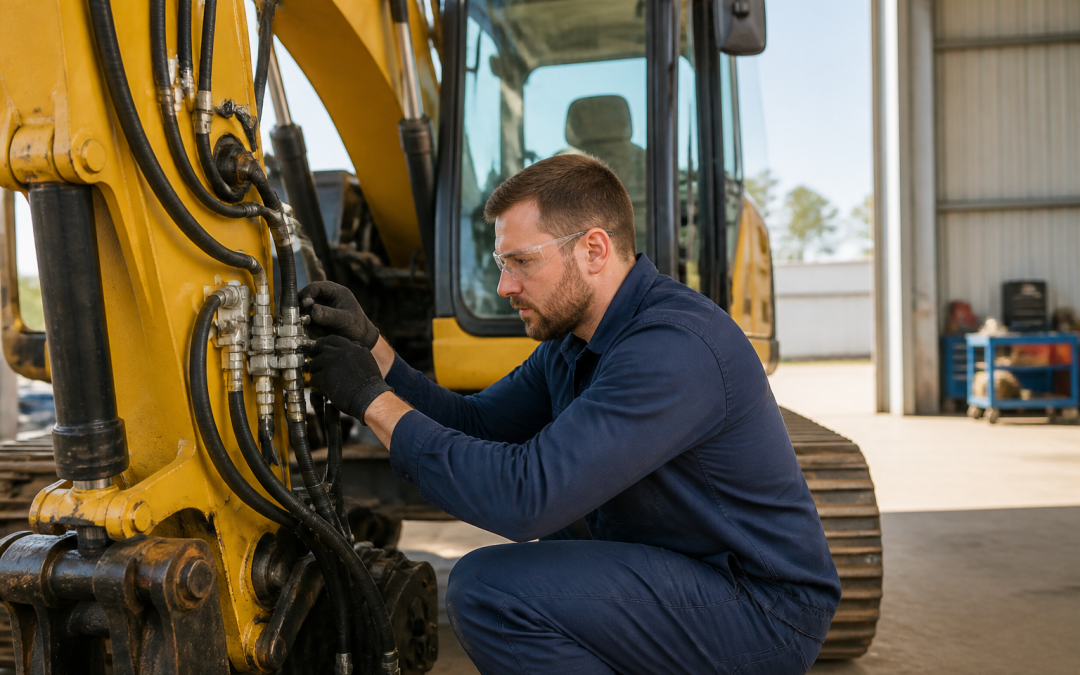
When a hydraulic hose fails, safe isolation and a clear assessment can limit downtime and help protect people and equipment. For operators in the Adelaide Hills, the priority is to stop the machine safely and avoid handling a pressurised line.
Stop and isolate the equipment
Shut the equipment down according to the site and manufacturer procedures, and keep people away from the affected area. Have a competent person safely isolate the machine and release stored hydraulic energy before inspection or repair. Never use hands to search for a high-pressure leak; hydraulic fluid injection injuries need urgent medical attention.
Record the hose details
If it is safe to do so, note the hose routing, fitting style, length and machine model. Photos taken from a safe distance can help a hydraulic technician prepare the appropriate replacement and reduce repeat visits.
Check the cause, not only the hose
Abrasion, tight bend radius, heat exposure and loose clamps can shorten hose life. A replacement is an opportunity to inspect routing and protection so the same failure is less likely to recur.
Arrange professional repair
Adelaide Hills Hydraulics can assess the failed hose and help identify a practical repair path for local machinery. Confirm the machine specifications and site access before work begins.
Frequently asked questions
What details should I give the repair technician?
Provide the machine make and model, site access details, the affected hose location and photographs taken from a safe distance. Do not approach the equipment to collect information until it is safe.
Can I keep operating with a leaking hydraulic hose?
Stop work and follow the site shutdown and isolation procedures. Keep people clear and arrange an assessment by a competent hydraulic technician before returning the equipment to service.
Contact Adelaide Hills Hydraulics
For emergency hydraulic hose repair in the Adelaide Hills, call 0492 806 847 or contact Adelaide Hills Hydraulics to discuss the equipment, location and safe access requirements.